
SAXOPHONE • TECHNIQUE
Why Your Saxophone Squeaks — And How to Fix It
 By So Wai19 November 2026 • 5 min read

Every saxophonist has experienced it at some point: you are in the middle of a rehearsal, performing a familiar melody, or perhaps playing an important solo when an unexpected high-pitched squeak interrupts the music.
Beyond the disruption itself, these unwanted sounds can be frustrating and even embarrassing, particularly during a performance.
Although squeaking is often associated with beginners, it can happen to saxophonists at every level.
More importantly, it does not necessarily indicate a lack of musical ability.
An unexpected squeak may result from several factors, including excessive embouchure pressure, incorrect reed placement, insufficient air support, poor finger coordination, or mechanical problems with the instrument.
Understanding the cause is the first step towards finding an effective solution.
Rather than simply repeating a passage and hoping for a better result, saxophonists can learn to identify specific problems and make targeted adjustments.
In this article, we will explore the most common causes of saxophone squeaking and introduce practical techniques to help you develop a more stable, controlled, and confident sound.
1. Embouchure: Are You Biting Too Hard?

One of the most common technical problems among beginner saxophonists is excessive tension in the embouchure.
The embouchure refers to the position and coordination of the lips, jaw, and surrounding facial muscles when playing a wind instrument.
On the saxophone, these muscles provide the support necessary for the reed to vibrate while maintaining control over the sound.
A frequent mistake is biting too firmly on the mouthpiece, particularly with the lower jaw.
When excessive pressure is applied to the reed, its natural vibration becomes restricted.
This can result in a thin, unstable tone, difficulty producing low notes, and sometimes unexpected high-pitched squeaks.
Interestingly, biting often develops as an unconscious response to insecurity.
When players struggle with a difficult passage or higher notes, they may instinctively tighten their jaw in an attempt to gain more control.
Unfortunately, this additional pressure can create precisely the opposite effect.
How can you fix it?
Begin by examining your embouchure.
Your upper teeth should rest comfortably on the mouthpiece, while your lower lip provides a supportive cushion for the reed.
The muscles around the mouth should remain engaged without creating excessive jaw pressure.
Practising long tones in the middle register is an effective way to develop this balance.
Sustain each note at a comfortable dynamic, paying attention to the stability of the sound and any unnecessary tension in the jaw.
Remember that a stable embouchure is not necessarily a tight one.
Effective control comes from balancing muscular support with the freedom of the reed to vibrate.
2. Reed Problems: A Small Detail That Makes a Big Difference
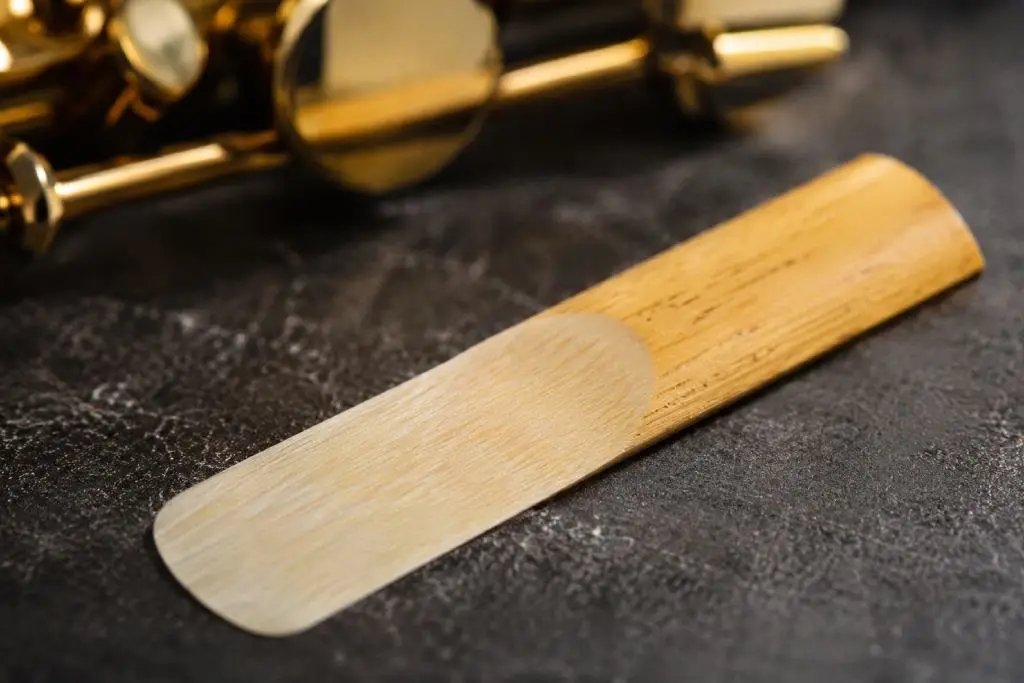
Sometimes, the cause of squeaking is not the player's technique but the reed itself.
The reed is a thin piece of cane or synthetic material attached to the mouthpiece.
When air passes through the mouthpiece, the reed vibrates and interacts with the instrument's acoustic system to produce sound.
Because the reed plays such a central role in sound production, even a small defect can affect the instrument's response.
A chipped or cracked reed may produce unexpected squeaks, while a poorly positioned reed can make certain notes difficult to control.
A reed that is too resistant for the player may also encourage excessive biting or unnecessary tension.
How can you fix it?
Before playing, examine the reed carefully.
Check that its tip is undamaged and that it is positioned centrally on the mouthpiece, with its tip approximately aligned with the mouthpiece tip.
It is equally important to choose an appropriate reed strength.
Beginners often benefit from a relatively flexible reed, although the ideal strength depends on the mouthpiece and individual playing technique.
Rather than assuming that a harder reed produces a better sound, focus on finding one that responds comfortably across the instrument's register.
Keeping several playable reeds in rotation is also useful.
If your saxophone suddenly begins squeaking, changing the reed can help determine whether the problem comes from the equipment or your playing technique.
3. Air Support and Voicing: Understanding the Role of Air

Although the saxophone produces sound through the vibration of a reed, airflow remains essential to maintaining a stable tone.
Many beginners assume that producing higher notes requires blowing harder.
In reality, saxophone playing involves much more than the quantity of air entering the instrument.
The consistency of airflow, air pressure, and position of the tongue and oral cavity all contribute to sound production.
When airflow becomes inconsistent, notes may respond unpredictably.
Similarly, an unsuitable tongue position, often described through the concept of voicing, can encourage the instrument to jump unexpectedly into a higher harmonic.
This is particularly noticeable during register changes or when playing certain notes that require more precise coordination.
How can you fix it?
Start with simple breathing and long-tone exercises.
Choose a comfortable note in the middle register and sustain it while maintaining an even, controlled airflow.
Next, practise moving slowly between neighbouring notes, listening carefully for any changes in tone quality or stability.
As you become more comfortable, introduce larger intervals and register changes without forcing the sound.
An important principle is to avoid compensating for every difficulty by tightening the jaw or blowing harder.
Instead, develop awareness of how airflow and voicing work together.
The goal is not simply to produce more air, but to use it efficiently and consistently.
4. Finger Coordination: When Small Movements Create Big Problems

Not every squeak originates from the mouthpiece.
In some cases, the problem is connected to finger coordination.
Unlike instruments where each note is produced by a single key, saxophone fingering often requires several keys to open and close simultaneously.
During rapid passages or large intervals, even a small delay between finger movements can briefly create an unintended fingering.
This may produce an unexpected note, an unstable response, or a squeak.
The problem becomes particularly noticeable when players increase the tempo before their finger movements are sufficiently coordinated.
How can you fix it?
Begin by practising difficult passages slowly, ensuring that all fingers move together.
Pay particular attention to transitions involving multiple fingers or the octave key.
Rather than lifting your fingers unnecessarily high above the keys, try to maintain small, relaxed movements.
Using a metronome can help develop consistency.
Start at a tempo where every note responds clearly, then increase the speed gradually without sacrificing precision.
Slow practice is not simply a preliminary stage before playing faster.
It allows musicians to identify inefficient movements and develop reliable coordination that remains effective at higher tempos.
Conclusion

An unexpected squeak can be frustrating, particularly during rehearsals and performances, but it is also a useful reminder of how many elements contribute to saxophone sound production.
From embouchure pressure and reed condition to airflow, voicing and finger coordination, each factor plays a role in producing a stable and controlled tone.
For beginners, the most effective approach is not to eliminate every mistake immediately, but to understand what causes it.
By identifying problems systematically and incorporating focused exercises into daily practice, saxophonists can gradually develop greater confidence and consistency.
Ultimately, learning the saxophone is not about avoiding mistakes altogether.
It is about learning to recognise them, understand them, and use them as opportunities for improvement.
With patience, attentive listening, and thoughtful practice, even the most unexpected squeak can become part of the journey towards a more expressive and reliable sound.
Ready to say goodbye to unwanted squeaks and play with confidence?
Discover our personalised saxophone lessons for adults at LMT Music Academy and take your playing to the next level.